TRANSMISSION // 2026.10.29.762914v1 AI ADAPTED
Plant lineages diverge in DNA methylation without demethylases
An Arabidopsis preprint reports that methylation gains accumulated and differed among demethylase-mutant lineages over nine generations.
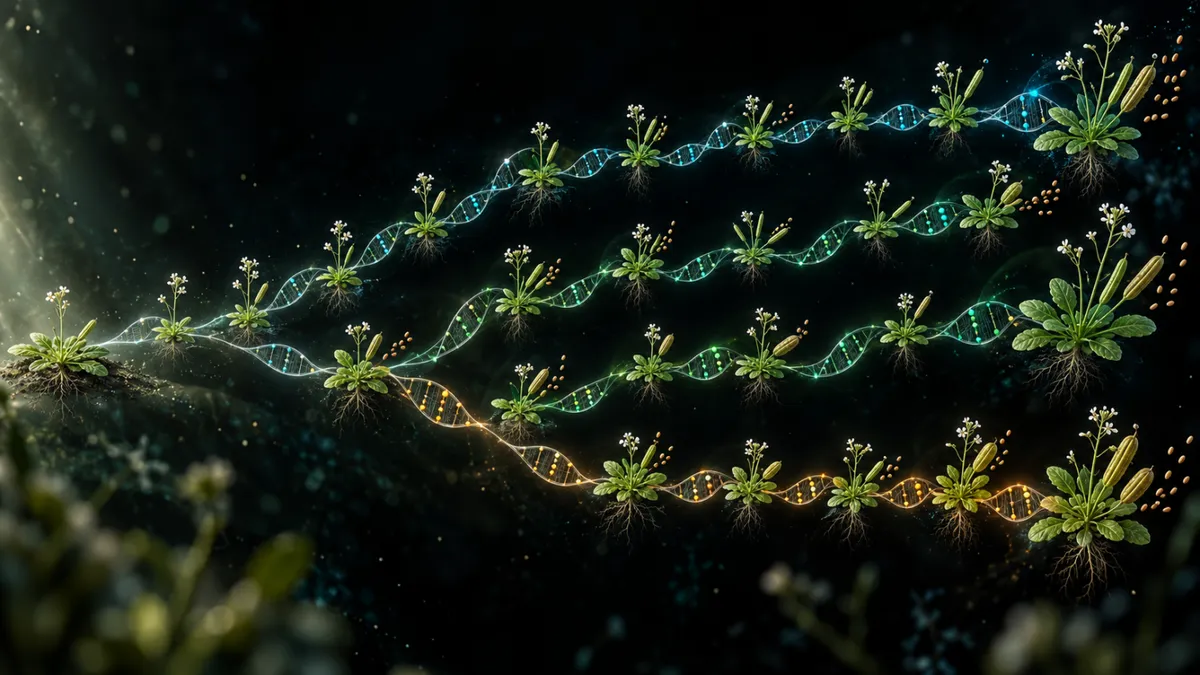
DNA methylation patterns can persist across generations, but a plant study suggests that enzymes removing methylation help keep those patterns from diverging between lineages.
What the study found
In a bioRxiv preprint, Dmitrieva and colleagues report following Arabidopsis plants with mutations in four DNA demethylases, alongside closely related wild-type lines, for nine generations of inbreeding by single-seed descent. DNA demethylases remove methylation marks from DNA.
The authors found that methylation gains accumulated across generations in the mutant lines. Previously methylated regions became more heavily methylated or spread into nearby sequences. Each inbred line also had hundreds of new methylation gains in previously unmethylated regions.
Two-thirds of all methylation gains and 85% of newly methylated locations occurred in only one inbred line. The authors say this pattern suggests substantial randomness in methylation changes over generations. Lines also differed substantially in their transcriptomes—their patterns of RNA transcripts—and small RNA profiles.
Why it matters
DNA methylation helps silence repetitive DNA and affects the expression of some genes. The authors propose that demethylases restrict the range of epigenetic and gene-expression states that lineages can reach over generations. Their findings offer a way to think about how methylation patterns remain relatively stable despite ongoing changes.
Limits and unknowns
The abstract does not specify the number of lines studied, the methods used to measure methylation and RNA, or the statistical uncertainty around the reported proportions. It also does not establish whether the methylation differences caused the observed RNA differences or describe consequences for plant traits. The study concerns Arabidopsis; the abstract does not establish whether its results apply to other species.
- Arabidopsis
- DNA methylation
- DNA demethylases
- epigenetics
- gene expression
- multigenerational inheritance
- preprint