CHANNEL ARCHIVE // [870] ARTICLES // PAGE 43 OF 58
Astrophysics
Research into stars, galaxies, cosmology, planets, and the physics of the universe.
CHANNEL // 04 [870]
Astrophysics
Research into stars, galaxies, cosmology, planets, and the physics of the universe.
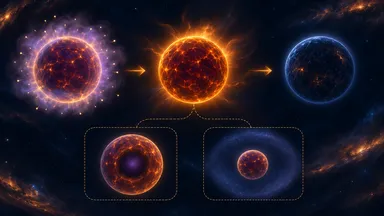
Dark Matter and the Evolution of Strange Stars
Source published
- strange quark stars
- fermionic dark matter
- compact stars
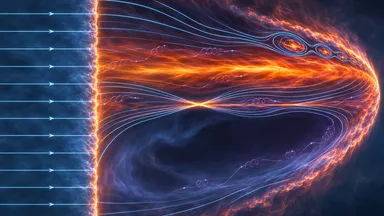
How shock-driven plasma jets may spark magnetic reconnection
Source published
- collisionless shocks
- high-speed plasma jets
- magnetic reconnection
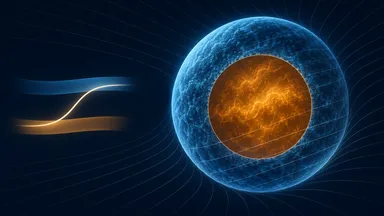
Can One Modified Gravity Rule Work Across a Star’s Different Matter Phases?
Source published
- modified gravity
- f(R,T) gravity
- hybrid stars
The first stars alone may not explain the iron in tiny galaxies
Source published
- Population III stars
- ultra-faint galaxies
- FIRE-3 simulations
A Python tool traces possible signals from the early universe
Source published
- PrimordialPy
- cosmic inflation
- primordial black holes
Stability Limits a Class of Interacting Dark-Sector Models
Source published
- dark sector
- dark energy
- superfluid cosmology
Stellar Motions Put NGC 3227’s Black Hole at About 12 Million Suns
Source published
- NGC 3227
- supermassive black holes
- stellar dynamics
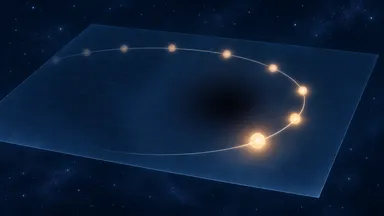
Stellar Accelerations and Jerks Could Help Gaia Find Hidden Black Holes
Source published
- Gaia DR3
- astrometry
- black hole candidates
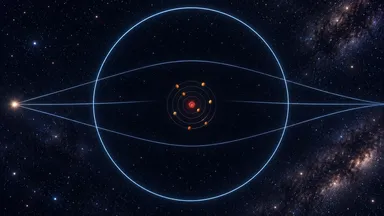
Why Roman’s Microlensing Survey Could Miss Systems Like TRAPPIST-1
Source published
- gravitational microlensing
- TRAPPIST-1
- Nancy Grace Roman Space Telescope
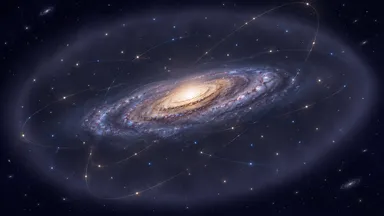
Distant Stars Give Two Different Estimates of the Milky Way’s Mass
Source published
- Milky Way mass
- DESI DR2
- Galactic halo
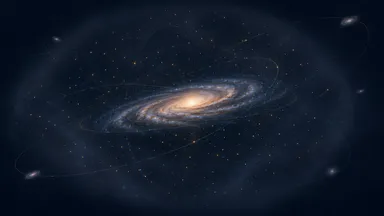
Halo Stars Help Put the Milky Way’s Mass Near 1.3 Trillion Suns
Source published
- Milky Way
- Galactic halo
- DESI
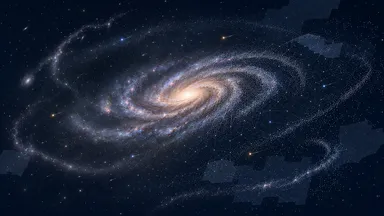
Simulated stars put Milky Way mass measurements to the test
Source published
- Milky Way
- DESI
- AuriDESI
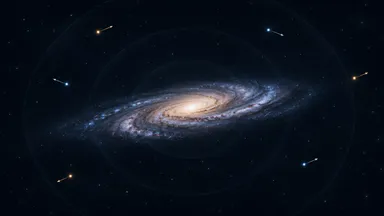
Distant stars help researchers weigh the Milky Way
Source published
- Milky Way mass
- DESI DR2
- stellar halo
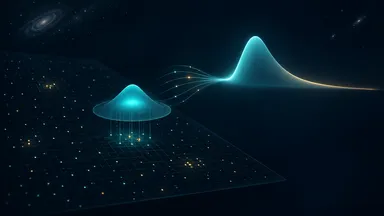
When a faint cosmic signal might just be a lucky scatter of photons
Source published
- astrophysics
- photon counting
- Poisson noise
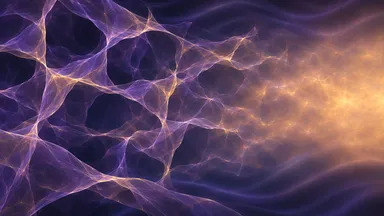
Could ancient cosmic walls have left a gravitational-wave background?
Source published
- domain walls
- primordial gravitational waves
- early Universe