CHANNEL ARCHIVE // [45] ARTICLES // PAGE 3 OF 3
Astrophysics
Research into stars, galaxies, cosmology, planets, and the physics of the universe.
CHANNEL // 04 [45]
Astrophysics
Research into stars, galaxies, cosmology, planets, and the physics of the universe.
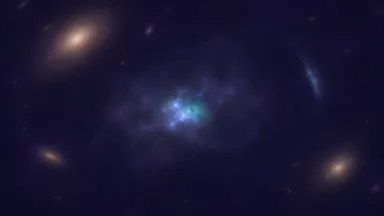
Webb finds a faint oxygen signal inside a nearly pristine galaxy
Source published
- LAP2
- James Webb Space Telescope
- oxygen abundance
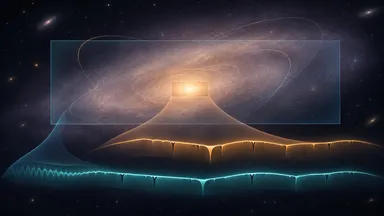
Stellar motions sharpen the estimate of M87’s black hole mass
Source published
- M87
- supermassive black holes
- JWST
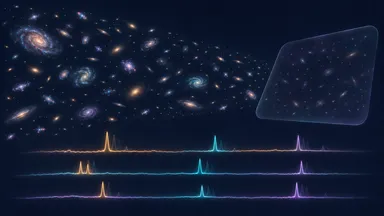
Euclid forecast points to millions of galaxy spectra, with oxygen-line counts less certain
Source published
- Euclid
- emission-line galaxies
- spectroscopy
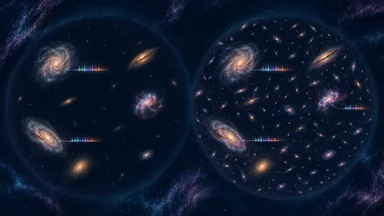
Euclid simulations expose the galaxies a bright-line survey can miss
Source published
- Euclid
- galaxy evolution
- spectroscopy
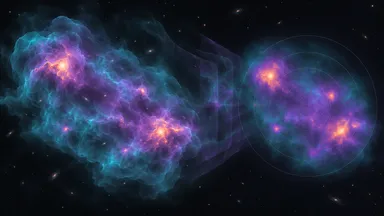
Bright gas clumps can skew galaxy-cluster measurements. A median helps
Source published
- galaxy clusters
- CHEX-MATE
- X-ray astronomy
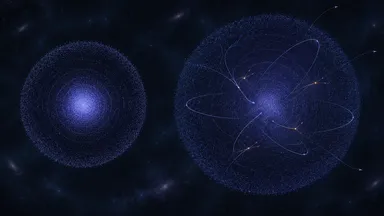
How Decaying Dark Matter Could Puff Up a Galactic Halo
Source published
- dark matter
- decaying dark matter
- galactic halos
- NO VISUAL
Lead-Rich Stars Offer Clues to a Hidden Heavy-Element Factory
Source published
- i-process
- nucleosynthesis
- barium stars
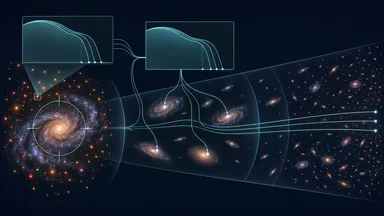
How Choices About Red Giant Stars Change the Inferred Expansion Rate
Source published
- Hubble constant
- Hubble tension
- tip of the red giant branch
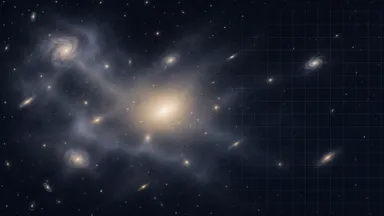
When Cleaning the Sky Erases a Galaxy Cluster’s Faint Glow
Source published
- intracluster light
- sky subtraction
- low surface brightness
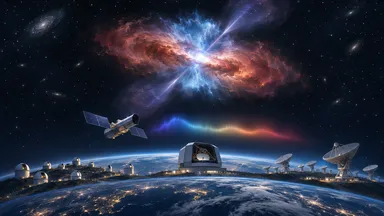
Catching a Neutron Star Merger’s Light Before It Fades
Source published
- gravitational waves
- kilonovae
- neutron star mergers
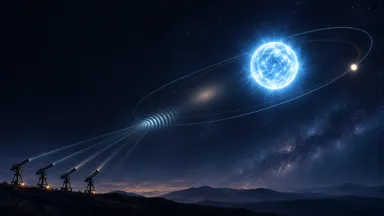
A binary star in Sagittarius’s Teapot reveals its orbit—and a distance problem
Source published
- Nandou
- Phi Sagittarii
- binary stars
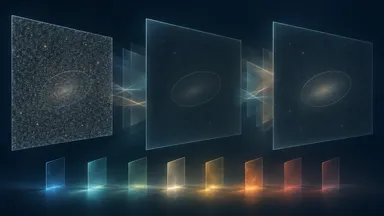
Cleaner galaxy images are not enough: denoising must preserve the light
Source published
- PAU Survey
- astronomical photometry
- self-supervised learning
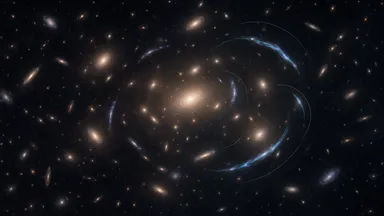
Tracing cosmic arcs: HLA-Net uses geometry to shortlist gravitational lens candidates
Source published
- gravitational lensing
- gravitational arcs
- HLA-Net
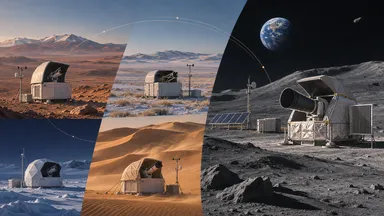
Testing Tomorrow’s Lunar Asteroid Telescopes in Earth’s Harshest Places
Source published
- near-Earth asteroids
- planetary defence
- lunar observatories
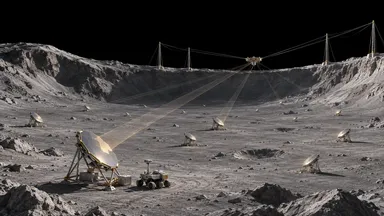
Could the Moon Become a Giant Optical Observatory?
Source published
- lunar astronomy
- hypertelescopes
- optical interferometry