CHANNEL ARCHIVE // [368] ARTICLES // PAGE 22 OF 25
Astrophysics
Research into stars, galaxies, cosmology, planets, and the physics of the universe.
CHANNEL // 04 [368]
Astrophysics
Research into stars, galaxies, cosmology, planets, and the physics of the universe.
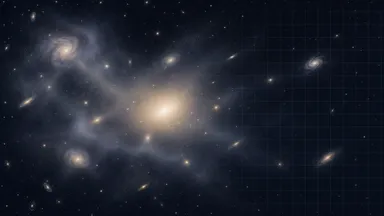
When Removing the Sky Also Removes a Cluster’s Glow
Source published
- intracluster light
- sky subtraction
- low surface brightness
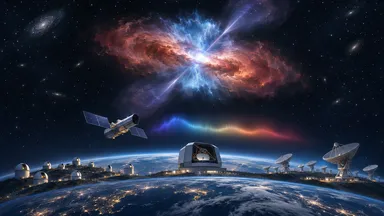
Catching a Neutron Star Merger’s Light Before It Fades
Source published
- gravitational waves
- kilonovae
- neutron star mergers
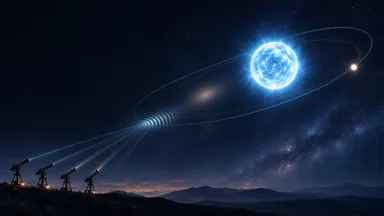
A binary star in Sagittarius’s Teapot reveals its orbit—and a distance problem
Source published
- Nandou
- Phi Sagittarii
- binary stars
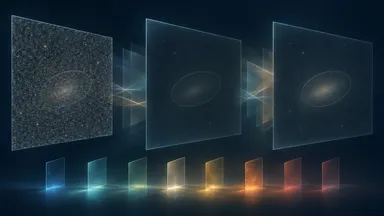
Cleaner galaxy images are not enough: denoising must preserve the light
Source published
- PAU Survey
- astronomical photometry
- self-supervised learning
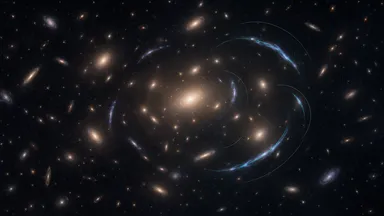
Can geometry help astronomers find gravitational arcs?
Source published
- gravitational lensing
- gravitational arcs
- HLA-Net
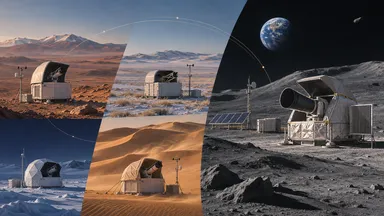
Testing Tomorrow’s Lunar Asteroid Telescopes in Earth’s Harshest Places
Source published
- near-Earth asteroids
- planetary defence
- lunar observatories
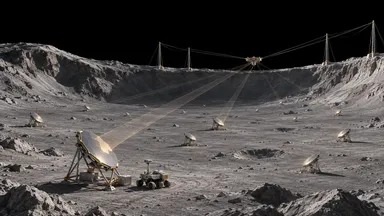
Could the Moon Become a Giant Optical Observatory?
Source published
- lunar astronomy
- hypertelescopes
- optical interferometry
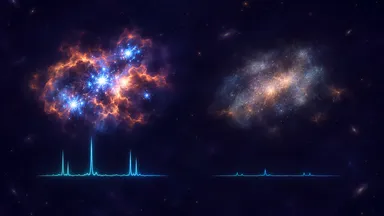
Fading galaxies could reveal why the early universe looks so bright
Source published
- JWST
- early galaxies
- bursty star formation
- NO VISUAL
What dead stars reveal about matter, gravity and the early Universe
Source published
- compact objects
- stellar evolution
- white dwarfs
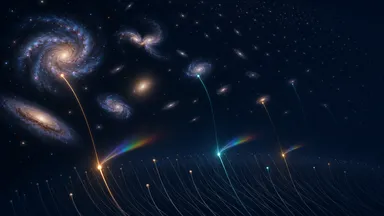
Choosing galaxies could shape the science of a future giant telescope
Source published
- Wide-field Spectroscopic Telescope
- galaxy surveys
- cosmology
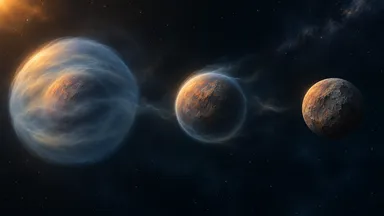
Stellar spin clocks suggest small planets keep changing for billions of years
Source published
- exoplanets
- radius valley
- super-Earths
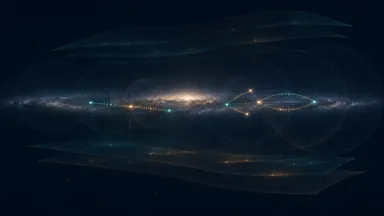
Hearing an alien civilization may be easier than exchanging replies
Source published
- SETI
- interstellar communication
- temporal networks

IceCube’s muons could track Antarctic atmospheric change—if detector drift is controlled
Source published
- IceCube
- atmospheric muons
- Antarctic stratosphere
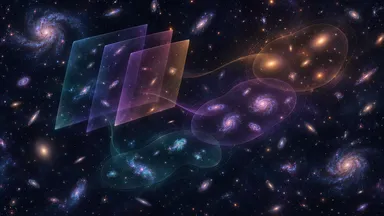
FOMO-Z uses galaxy colors to estimate redshifts and classify populations
Source published
- FOMO-Z
- galaxy classification
- photometric redshifts
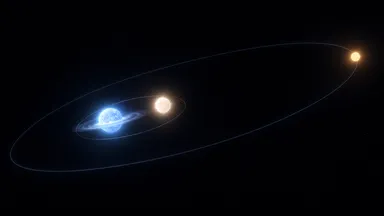
Could a third star help Be stars spin up?
Source published
- Be stars
- hierarchical triples
- Kozai–Lidov mechanism