CHANNEL ARCHIVE // [279] ARTICLES // PAGE 15 OF 19
Astrophysics
Research into stars, galaxies, cosmology, planets, and the physics of the universe.
CHANNEL // 04 [279]
Astrophysics
Research into stars, galaxies, cosmology, planets, and the physics of the universe.
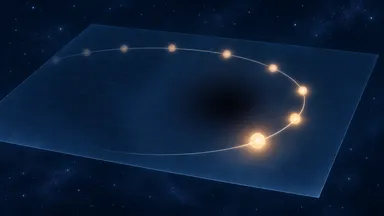
Stellar Accelerations and Jerks Could Help Gaia Find Hidden Black Holes
Source published
- Gaia DR3
- astrometry
- black hole candidates
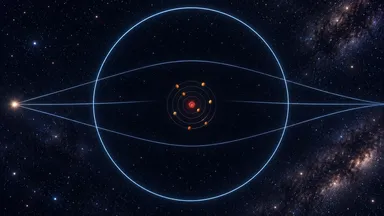
Why Roman’s Microlensing Survey Could Miss Systems Like TRAPPIST-1
Source published
- gravitational microlensing
- TRAPPIST-1
- Nancy Grace Roman Space Telescope
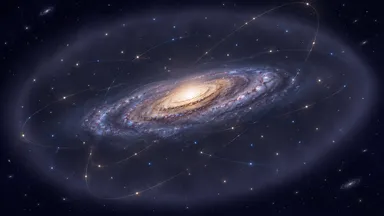
Distant Stars Give Two Different Estimates of the Milky Way’s Mass
Source published
- Milky Way mass
- DESI DR2
- Galactic halo
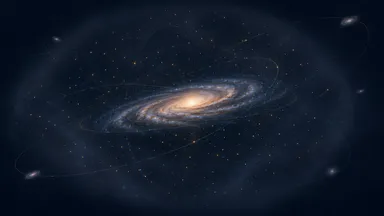
Halo Stars Help Put the Milky Way’s Mass Near 1.3 Trillion Suns
Source published
- Milky Way
- Galactic halo
- DESI
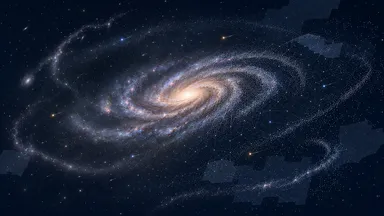
Simulated stars put Milky Way mass measurements to the test
Source published
- Milky Way
- DESI
- AuriDESI
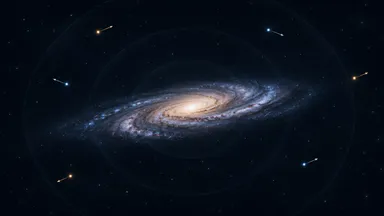
Distant stars help researchers weigh the Milky Way
Source published
- Milky Way mass
- DESI DR2
- stellar halo
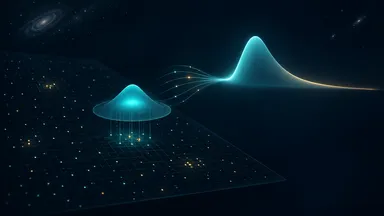
When a faint cosmic signal might just be a lucky scatter of photons
Source published
- astrophysics
- photon counting
- Poisson noise
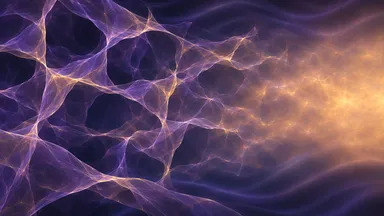
Could ancient cosmic walls have left a gravitational-wave background?
Source published
- domain walls
- primordial gravitational waves
- early Universe
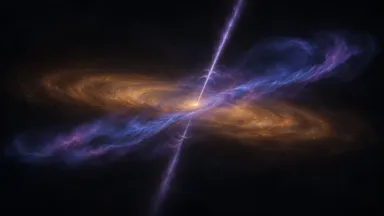
Webb maps gas and stars moving differently around faint active black holes
Source published
- astrophysics
- James Webb Space Telescope
- NIRSpec
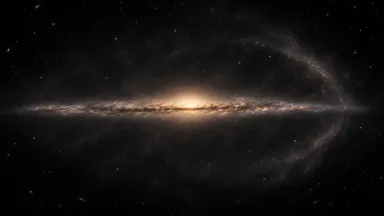
Star Motions Reveal Clues to a Past Merger in NGC 253
Source published
- NGC 253
- stellar halo
- galaxy mergers
Webb spots a faint oxygen line in a distant galaxy’s core
Source published
- LAP2
- James Webb Space Telescope
- oxygen abundance
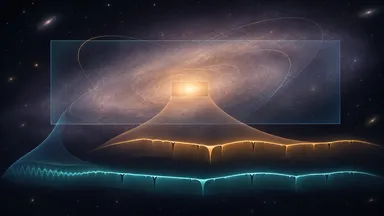
Stellar motions sharpen the estimate of M87’s black hole mass
Source published
- M87
- supermassive black holes
- JWST
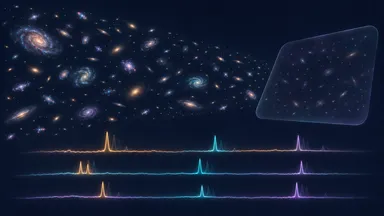
Euclid forecast points to millions of galaxy spectra, with oxygen-line counts less certain
Source published
- Euclid
- emission-line galaxies
- spectroscopy
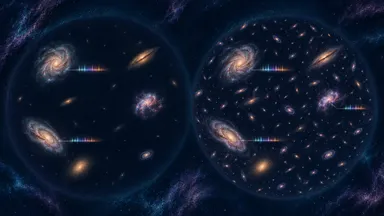
Which galaxies could Euclid’s surveys miss?
Source published
- Euclid
- galaxy evolution
- spectroscopy
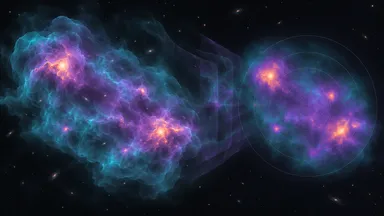
How bright knots of gas complicate measurements of galaxy clusters
Source published
- galaxy clusters
- CHEX-MATE
- X-ray astronomy