CHANNEL ARCHIVE // [2773] ARTICLES // PAGE 166 OF 185
Artificial Intelligence
Research into artificial intelligence and intelligent systems.
CHANNEL // 01 [2773]
Artificial Intelligence
Research into artificial intelligence and intelligent systems.

Why AI agents still struggle to work as a team
Source published
- AI agents
- multi-agent coordination
- large language models

A graph-based model for spotting essential genes
Source published
- essential genes
- graph neural networks
- protein interaction networks
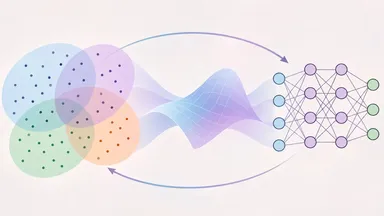
What Does It Mean for an AI to Learn a Concept?
Source published
- sparse autoencoders
- AI interpretability
- concept learning

When AI agents need a workflow—and when they don’t
Source published
- AI agents
- agent orchestration
- retrieval-augmented generation

Training recurrent networks without unrolling them
Source published
- recurrent neural networks
- machine learning
- AI training

Can AI agents build tougher tests for AI?
Source published
- AI benchmarks
- language models
- multimodal AI

Can Emergent Communication Reveal Clues About AI Consciousness?
Source published
- AI consciousness
- emergent language
- multi-agent reinforcement learning

Can synthetic brain data make image decoding more efficient?
Source published
- fMRI
- brain decoding
- synthetic data

Why robot actions may need only one generative step
Source published
- robotics
- vision-language-action models
- flow matching

Can a model’s sense of itself help prevent misalignment?
Source published
- emergent misalignment
- language models
- self-recognition

When Chess Groups Think Better Together—and When They Don’t
Source published
- DeliChess
- group deliberation
- chess puzzles

How Frequency Helps AI Sort Image Matches
Source published
- computer vision
- image matching
- Mamba

A New Benchmark Tests How AI Labels Books
Source published
- LCSHBench
- library cataloging
- subject headings

OpenRFM aims to make relational-data prediction more open
Source published
- relational databases
- foundation models
- synthetic data

How Binary Sequences Can Help Identify AI Settings
Source published
- large language models
- AI fingerprinting
- FLIPS