TRANSMISSION // 2609.03859v2
What O4’s gravitational-wave catalogue reveals
Source published
A review of LIGO–Virgo–KAGRA’s fourth observing run finds that growing catalogues are revealing patterns across black-hole mergers, while important interpretations remain uncertain.
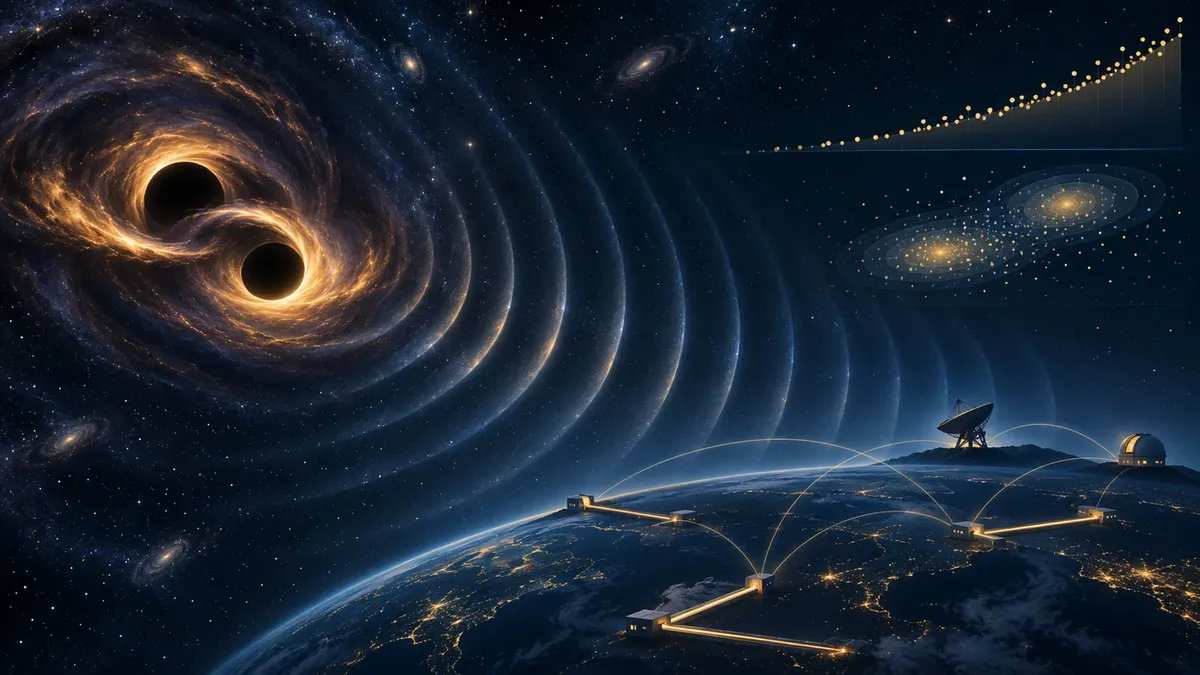
The latest gravitational-wave detections are more than a collection of spectacular collisions. A review by Christopher P. L. Berry and Daniel Williams explains how the expanding LIGO–Virgo–KAGRA catalogue is helping researchers study the populations behind the signals—and why those conclusions still depend on careful modelling.
Gravitational-wave astronomy began with a landmark detection in 2015. A decade later, LIGO, Virgo and KAGRA—the international detector network known as LVK—are recording candidates often enough that researchers can ask questions about the whole population, not just one remarkable event. In this review, Christopher P. L. Berry and Daniel Williams survey what the fourth observing run, or O4, has added to that picture.
The central question is how a growing catalogue can illuminate the lives and origins of merging black holes and neutron stars, while also testing gravity and informing cosmology. The authors review findings reported in recent catalogues and related analyses; they do not present a new detector experiment or a single new population analysis of their own.
From individual signals to population patterns
O4 ran from 2023 to late 2025 and was divided into three periods: O4a, O4b and O4c. The review discusses catalogue releases covering O4a and O4b. Each added roughly 100 detections, according to the authors. Better detector sensitivity can make signals from farther away detectable, while louder signals can allow more precise measurements. A larger sample also makes it easier to look for patterns that would be hard to establish from a few events.
Some individual events stand out. GW230529 involved a neutron star and a low-mass black hole in the so-called lower mass gap, a range where black holes had been scarce in earlier observations. Its existence shows that the range is not empty, though the review notes that black holes there may still be uncommon. GW231123, meanwhile, was reported as the most massive merger observed to date. Its inferred masses and spins could fit an unusual history, such as earlier mergers that built up the black holes—but that is a possible interpretation, not a settled explanation.
The review stresses a particular uncertainty for GW231123: different gravitational-waveform models give significantly different results for its source properties. Waveforms are the predicted signal patterns used to interpret detector data. If models disagree, exact claims about a source’s mass and spin become harder to make. The authors also discuss gravitational lensing as an alternative explanation, but say the available evidence does not establish that lensing is preferred.
O4b brought especially loud signals, including GW250114, which the review identifies as the loudest detected to date. Its signal enabled researchers to resolve features of the black hole’s ringdown—the fading vibrations after a merger—and test whether they were consistent with a Kerr black hole, the kind described by general relativity. That is a test of a prediction, not proof that every aspect of gravity has been confirmed.
Why the whole catalogue matters
Across many events, researchers can estimate how black-hole masses and spins are distributed. The review describes evidence that the population has structure, including possible groups with different spin properties at different masses. Such patterns may help distinguish formation pathways, including mergers in dense environments. But population findings are not immune to uncertainty: they can depend on the assumptions and choices built into statistical models. The authors point to examples where a proposed feature weakened or changed under further analysis, and argue that results should be checked against different models.
The review also covers tests of general relativity and measurements of cosmic expansion. Combining signals can improve some tests, but the authors caution that an apparent discrepancy in one combined ringdown analysis may reflect simplified assumptions about detector noise. For cosmology, gravitational-wave distances can be paired with information about a source’s redshift. Events with identified light counterparts can provide that information directly; without one, researchers use statistical approaches that generally have larger uncertainties.
What to take away—and what remains open
The broad message is that catalogue growth changes the science: individual events reveal unusual systems, while population studies can expose trends and test whether they are robust. The evidence does not yet settle how all detected binaries formed, whether every apparent subgroup is real, or whether a possible mismatch with general relativity signals new physics rather than limitations in modelling or noise assumptions.
This article is based on a review available as an arXiv preprint, not a new primary analysis. Its conclusions summarize results from multiple studies, whose methods and publication status vary; the review itself should not be mistaken for independent confirmation of each result. The authors say the final O4 catalogue is expected in December 2026. That future release may refine the picture, but the review’s account is a snapshot of the evidence and expectations available in its version.
- gravitational waves
- LIGO
- Virgo
- KAGRA
- black holes
- O4 observing run
- astrophysics
Related reading
Automatically matched by shared topic keywords. These links do not imply that the sources agree or establish a consensus.
Eccentricity remains uncertain in three gravitational-wave events
Source published
Shared keywords: gravitational waves
Could LIGO triggers hint at sub-solar objects?
Source published
Shared keywords: gravitational waves
New Data Products for Gravitational-Wave Alerts
Source published
Shared keywords: gravitational waves
Even powerful birth kicks struggle to reverse black hole binary orbits
Source published
Shared keywords: gravitational waves
Radio Silence Limits a Supernova Jet Model
Source published
Shared keywords: gravitational waves